

Hi, Kevin here.
There is a persistent myth in design, one that goes back much further than the Bauhaus or the Industrial Revolution. It is the myth of the "God-Architect." This myth relies on a specific worldview: that the designer stands outside the world, looking down at a chaotic pile of matter, and imposes order upon it.
We call this Dualism. It is the separation of Mind from Body, Subject from Object, and Designer from User. It suggests that we (the active agents) have the ideas, and it (the passive material) waits to be shaped.
But what if we flattened the hierarchy? What if we accepted that the designer, the user, the plastic of the chair, and the code of the app are all made of the exact same ontological "stuff," interacting on a single, continuous plane?
This is the worldview of Monism. Not the monism of a static, unified "One" (where everything is the same), but what Gilles Deleuze called a "Pluralist Monism." It is a worldview that replaces fixed identities with fluid processes, and functional tools with fields of potential.
If we take this philosophy seriously, it dismantles the very definition of what it means to design. We stop being "problem solvers" who fix the world from the outside, and become mediators surfing the flows of the world from within.

The Flat Ontology: Difference Over Identity
In our standard way of thinking, we prioritize Identity. We see a "chair," a "smartphone," or a "user persona." We assume these things exist first as stable entities, and that any change that happens to them is secondary.
In his seminal work Difference and Repetition (1968), Deleuze flips this entirely. For him, Difference is primary. Identity is just an optical illusion, a moment where the flow of difference slows down enough for us to give it a name.
Think of a whirlpool in a river. We can point to it, name it, and even map its location. It has an "identity." But the whirlpool is not a solid object; it is a process of flowing water. If you stop the flow (the difference), the identity vanishes.
In design, we are obsessed with stabilizing these flows into fixed identities. We freeze a complex set of human behaviors into a "User Journey." We freeze a fluid material into a rigid "Product." We treat the world as a collection of static nouns, when it is actually a mesh of active verbs.
A monist design practice admits that there are no fixed identities. There are only assemblages. The "smartphone" is not an isolated object; it is a temporary knot tied between global supply chains, rare earth minerals, attention spans, server farms, and thumb muscles.
When we stop designing for "Identities" (fixed demographics, static products) and start designing for "Difference" (becomings, transitions, variations), we stop trying to arrest the world and start trying to move with it.
From Hylomorphism to Morphogenesis
The dualist trap leads to what Gilbert Simondon (a key influence on Deleuze) called Hylomorphism: the idea that design is the imposition of an abstract Form (morphe) onto passive Matter (hyle). This is the "blueprint" model of design. You have an idea in your head, and you force the wood, steel, or pixel to obey. It is an act of domination.
Monism proposes Morphogenesis instead. In this view, matter is not passive. It is alive with "singularities" – tipping points, resistances, and tendencies. The wood wants to bend a certain way; the data wants to cluster in specific patterns.
Architectural theorist Lars Spuybroek, in The Sympathy of Things (2011), argues for a "digital gothic" where the designer does not impose form but "sympathizes" with the material, allowing the form to emerge from the internal forces of the system.
The monist designer does not command; they surf. They find the lines of flight already present in the material (or the social situation) and follow them. We don't create the wave; we enter into a relationship with it.
The Body without Organs: Designing the Functionless
If we reject the idea that we must impose a fixed form or function, where does that leave us? It brings us to Deleuze and Guattari's most enigmatic concept from A Thousand Plateaus (1980): the Body without Organs (BwO).
To understand the BwO, we have to distinguish between the Body and the Organism.
- The Organism is a body that has been captured, stratified, and organized. It has specific organs for specific tasks. A toaster is an organism: it has a mouth (slot), a stomach (heater), and a limb (lever). It is locked into a single function. It can only toast.
- The Body without Organs is the body before it is locked down. Deleuze uses the metaphor of the unfertilized egg. The egg is a body, but it has no organs yet. It is a surface of pure potential. It is crisscrossed by gradients and intensities, but it hasn't yet decided what it will become.
Most of professional design is the business of creating Organisms. We create "solutions" that dictate exactly how they must be used. We design apps with "happy paths" that force users into specific behaviors. We stratify experience.
But there is a counter-movement of Open-Ended Design that seeks to create Bodies without Organs. These are objects, spaces, or tools that refuse to tell you what they are for. They are "functionless" not because they are useless, but because they have infinite potential uses.
The Terrain Vague
Ignasi de Solà-Morales coined the term Terrain Vague to describe urban spaces (abandoned lots, industrial ruins) that have fallen out of the capitalist circuit of productivity. These are BwOs. Unlike a park (an organism with paths and benches dictating movement), the terrain vague is a space of pure freedom where new, unplanned behaviors (skateboarding, graffiti, wild gardening) can emerge.

The Digital Body without Organs
In the digital space, we can see the battle between the Organism and the BwO clearly in three specific instances:
A. Minecraft: Survival vs. Creative
Minecraft offers the perfect case study for the difference between an Organism and a BwO.
- Survival Mode (The Organism): In this mode, the player is stratified. You have a "health bar" and a "hunger bar" (organs). These organs dictate your behavior: you must eat, sleep, and build shelter to protect your body. The game imposes a teleology (survive, kill the Dragon).
- Creative Mode (The BwO): When you switch to Creative Mode, you remove the organs. The health and hunger bars vanish. You can fly. Resources are infinite. The game ceases to be a "game" with a goal and becomes a pure plane of consistency. It transforms into a BwO, a "functionless" space where the only limit is the player's capacity to affect and be affected by the blocks. It is a "monist" world where everything is made of the same substance (the voxel), waiting for desire to shape it.
B. The "Sandbox" & Garry's Mod
Most video games are "Organisms": they have a start, an end, and a correct way to be played. However, the "Sandbox" genre represents a shift toward the BwO.
- Garry's Mod (GMod): Originally a mod for Half-Life 2, GMod strips the game of its story, enemies, and objectives. It gives the player the raw physics engine and the assets (the "stuff" of the world) but no instructions. It is a "machine for making machines."
- Roblox: Similarly, Roblox is not a game but a "platform", a BwO that allows users to graft their own "organs" (games) onto it. It is a destratified engine that waits for the user to inscribe meaning onto it.
C. Speedrunning as Destratification
Even in a linear, story-driven game (a strict Organism), players can force a BwO to emerge through Speedrunning.
- The Concept: A "Speedrunner" ignores the intended organs of the game (the story, the cutscenes, the intended path). Instead, they look for "lines of flight": glitches, wall-clips, and physics exploits.
- The Result: By breaking the sequence, they turn the solid map of the game into a fluid space. They traverse walls and skip entire levels. They treat the game code not as a law to be obeyed, but as a material to be surfed. They reveal that the "rules" of the game were just an optical illusion all along.
Practical Application: The De-stratification Audit
How do we apply high-level French philosophy to our daily design work? We must learn to spot where we are over-stratifying our products and where we can reintroduce potential.
I call this The De-stratification Audit. You can use this in your next design sprint or critique.
The Exercise:
- Identify the Organism: Take your current project (an app, an object, a service). Define its "Official Identity." (e.g., "This is a productivity app for remote teams.")
- Map the Organs: List the specific features or constraints that enforce this identity. (e.g., "The notification system," "The forced login," "The linear onboarding tutorial.")
- Perform a Surgical Removal: What happens if you remove the most critical organ? If you remove the "notification system," or some of its rules, does the app die? Or does it become a passive repository of knowledge?
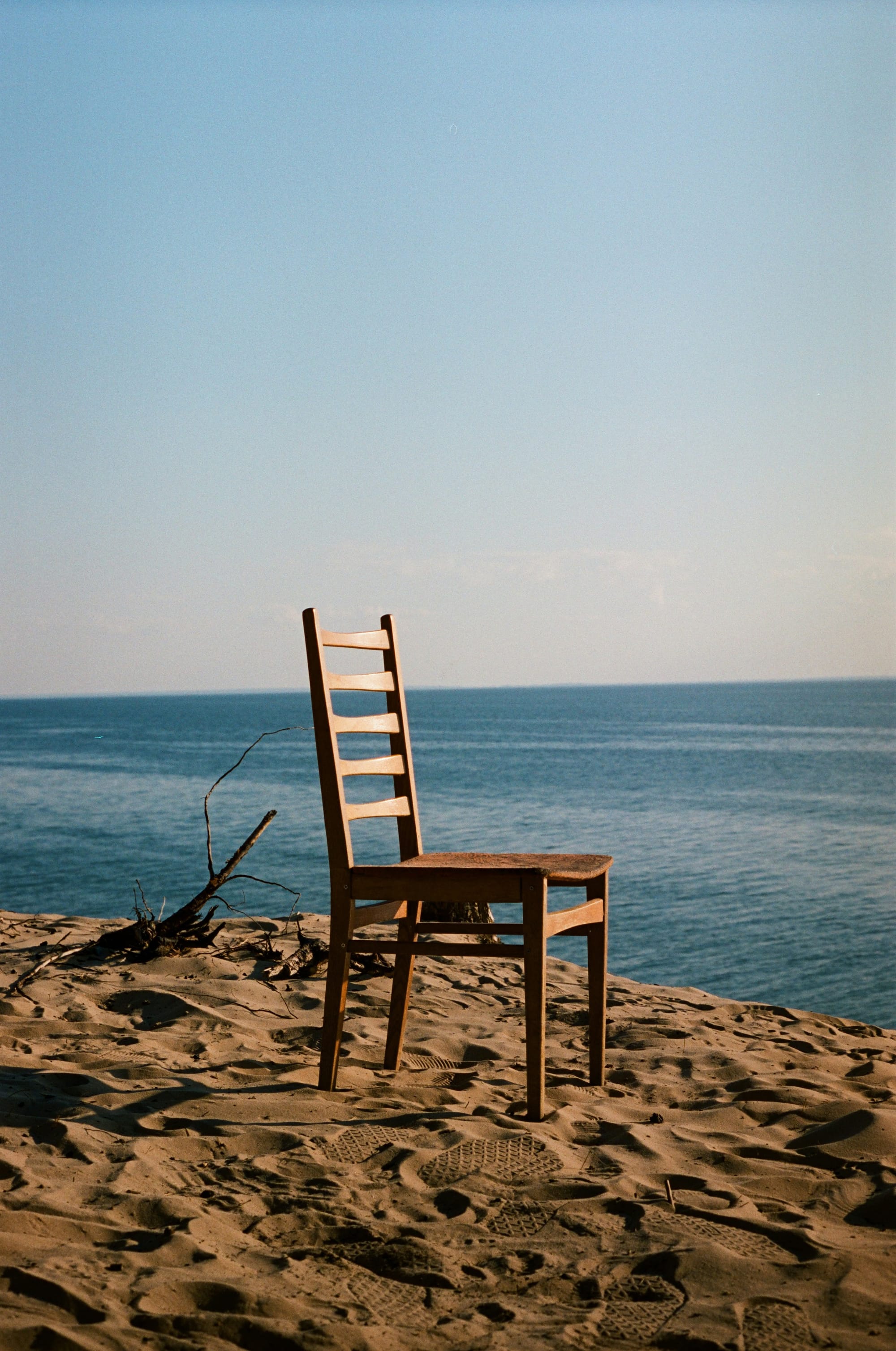
- Observe the Lines of Flight: Once the function is broken or loosened, what new behaviors might emerge? If the chair can no longer be sat on comfortably (perhaps it’s too low or wobbles), does it become a sculptural object? A play structure? A barrier?
This essay explores Monism, specifically Gilles Deleuze’s "pluralist monism", as a foundational worldview for design. It contrasts this with traditional dualistic approaches and integrates practical exercises and digital examples.
Conclusion: Designing for Intensity
Adopting a monist worldview in design is risky. It means giving up the safety of the "solution."
When we design for Identity, we create products that are easy to consume, market, and discard. We create "toasters": efficient, functional, and dead.
When we design for Difference, we create "eggs." We create systems that are alive, unpredictable, and open to change. We stop asking "What is this object?" and start asking "What can this body do?"
This is not a call to stop making useful things. It is a call to recognize that utility is just one temporary state of a much larger reality. By stepping down from the role of the God-Architect and entering the flat plane of immanence, we might find that the most powerful design is the one that designs nothing in particular, but enables everything to become.
References & Further Reading
- Gilles Deleuze, Difference and Repetition (1968)
For the concept of difference vs. identity. - Gilles Deleuze & Félix Guattari, A Thousand Plateaus (1980)
For the Rhizome and Body without Organs. - Gilbert Simondon, On the Mode of Existence of Technical Objects (1958)
For the critique of hylomorphism. - Lars Spuybroek, The Sympathy of Things (2011)
For a direct application of Deleuze and Ruskin to design. - Manuel DeLanda, Deleuze and the Use of the Genetic Algorithm in Architecture
On evolutionary design and morphogenesis. - Ignasi de Solà-Morales, Terrain Vague (1995)
On the architecture of the void.
Thanks for reading!
Kevin from Design & Critical Thinking


Discussion