Senior Designer & Strategist in the🇨🇭Insurance industry. Critical / Design / Systems / Complexity thinker, learner, practitioner —Design as a catalyst for change.
Abstract dark waves, evoking flows and intensities of desire beyond fixed forms. Photo by Pawel Czerwinski on Unsplash
Why “User Needs” Mislead and How Context Shapes What We Want
In contemporary design practice, the language of user needs has become almost axiomatic. Designers are trained to identify needs, frame them as problems, and then generate solutions that meet them. This framing gives the impression of neutrality and rationality: needs appear as if they were stable objects waiting to be uncovered, measured, and satisfied. Yet this assumption rests on a rationalist view of reality that presumes objectivity and universality. By treating needs as pre-given, the discourse of design hides the fact that what it calls a “need” is already the outcome of social, political, and aesthetic processes.
Deleuze and Guattari (1987) remind us that desire is not a lack awaiting fulfillment but a productive, machinic force. Desire continuously assembles flows of people, objects, technologies, and signs into provisional formations. What we call “needs” are in fact codified crystallizations of these flows once they have been captured by institutions, markets, and norms. In parallel, Foucault (1990) shows that power does not simply repress but produces subjects and truths. When organizations speak of “user needs,” they mobilize power/knowledge practices that define legitimate forms of wanting and make them actionable. In other words, needs are not discovered; they are constructed within specific discursive regimes.
This essay argues that design should not be understood as responding to universal user needs but as participating in the shaping of desires. These desires are always local and contextual, mediated through social relations, aesthetic forms, and political structures. To analyze this dynamic, I draw on a trioptic framework—social, aesthetic, and political lenses—that makes visible how desire is produced, governed, and felt. By moving from needs to desire, designers can begin to see their work not as neutral problem-solving but as an intervention in the assemblages that make certain futures possible while foreclosing others.
The Trouble with User Needs
The Value Proposition Canvas builds on Jobs To Be Done (JTBD), a predominantly rationalist view of customer needs. Source
The phrase user needs has long served as a cornerstone of design discourse, from human-centered design to agile UX. It appears commonsensical: designers must understand what users need in order to create valuable products and services. Yet this apparent common-sense masks deep philosophical assumptions. To speak of “needs” is to assume that they exist as objective features of the world: stable, universal, and waiting to be revealed by proper methods. Surveys, interviews, or usability tests are thus cast as scientific instruments for extracting these latent truths.
This rationalist inheritance is not accidental. The rise of modern design practice coincided with positivist approaches in the social sciences, where researchers sought general laws of human behavior by stripping away context. Within this paradigm, the designer becomes a kind of technician of truth, uncovering the “real” needs that lie beneath subjective preferences or situational variations. Once identified, these needs are treated as timeless coordinates for decision-making, guiding everything from feature lists to business cases.
But such a framing is misleading. First, it assumes that needs are transparent to both researcher and participant. In practice, what people articulate as a “need” often reflects desires that have already been shaped by advertising, institutional expectations, or prevailing cultural norms. Foucault (1990) would remind us that knowledge is never neutral: every attempt to define a need is also an exercise of power, producing legitimate categories of users and excluding others. A health insurance company, for instance, might identify a user’s “need” for digital self-service tools, but this framing ignores how the very category of “self-service” has been politically and economically constructed as a desirable mode of governance.
Second, the language of needs implies universality. A need is assumed to be the same across contexts: what one user needs in Zurich is, in principle, identical to what another needs in Yaoundé. Yet as Deleuze and Guattari (1987) argue, desire is always local, immanent to specific assemblages of bodies, technologies, and signs. By translating situated desires into abstract “needs,” designers erase the very contexts that give them meaning.
Finally, the focus on needs carries a subtle depoliticization. By presenting itself as neutral problem-solving, design avoids confronting its role in shaping futures. Tony Fry (2011) critiques this tendency as defuturing: the way design often closes down possibilities by reinforcing existing systems under the guise of meeting needs. Although Fry’s emphasis is on sustainability, the point applies more broadly: when designers take needs as given, they risk reproducing rather than questioning the assemblages of desire and power in which those needs are articulated.
In short, the discourse of user needs is less a reflection of objective reality than a rationalist fiction. It grants designers a sense of certainty while obscuring the productive role of desire and the political stakes of design practice.
Sign up for the Design & Critical Thinking newsletter
No spam. Unsubscribe anytime.
Desire with Deleuze
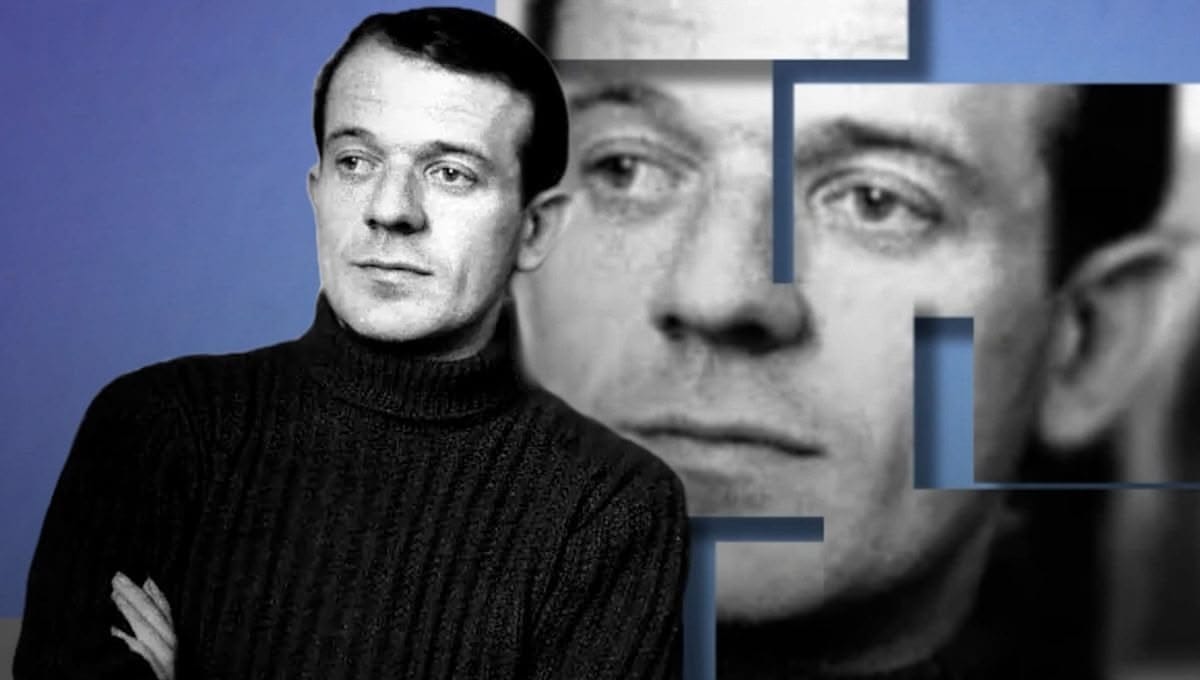
Gilles Deleuze
If the notion of needs reduces human experience to an objective lack, Deleuze and Guattari offer a radically different vocabulary. In Anti-Oedipus, they insist that desire is not defined by what it is missing but by what it produces. “It is not a question of ideology,” they write, “but of pure production” (Deleuze & Guattari, 1983/2004, p. 26). Desire is machinic: it connects flows of people, things, and signs into new assemblages. Far from being an inner void to be filled, it is a generative force that continuously remakes worlds.
This shift matters for design. When designers ask, “what are the user’s needs?,” they implicitly imagine the user as a subject of lack. A rationalist research process then promises to reveal and satisfy this lack. But if we follow Deleuze, there are no pre-given needs waiting to be uncovered. There are only desires in motion: flows of energy and attachment that pass through devices, spaces, discourses, and institutions. A smartphone, for example, is not fulfilling a universal “need to communicate.” It is part of an assemblage that ties together mobility, intimacy, labor, and surveillance. What appears as a need (“I must have constant connectivity”) is in fact the crystallization of multiple desiring-flows captured by technological and economic systems.
Deleuze’s account also unsettles the assumption that needs can be neatly categorized. Desires proliferate, split, and recombine. They are transversal, cutting across domains of life and refusing to respect disciplinary boundaries. A health-tracking app might be designed to meet the “need” of monitoring physical activity. But its use also generates desires for self-optimization, produces anxieties around performance, and plugs into data assemblages that feed insurance models or targeted advertising. To reduce this complexity to a single “user need” is to miss the machinic productivity of desire.
For design, the lesson is twofold. First, what we take as user needs are not objective givens but the stabilized products of desiring-assemblages. Second, design itself is not a neutral response but an active participant in this process of capture and stabilization. By materializing certain forms of desire and rendering them actionable, design helps to channel and territorialize the flows that constitute everyday life. In other words, design is not about meeting needs, it is about shaping desire.
Power with Foucault
Michel Foucault
If Deleuze helps us see needs as crystallized forms of desire, Foucault allows us to understand how these crystallizations are governed. For Foucault, power is not primarily repressive but productive: it generates subjects, norms, and truths. “Power produces; it produces reality; it produces domains of objects and rituals of truth” (Foucault, 1990, p. 194). In this sense, the very category of user needs is not neutral—it is a product of power/knowledge, a regime that defines what can be said, measured, and acted upon in design practice.
Senior Designer & Strategist in the🇨🇭Insurance industry. Critical / Design / Systems / Complexity thinker, learner, practitioner —Design as a catalyst for change.
Through Strategic Design, I discovered the power of putting things into perspective, creating frameworks, communicate and solve problems. Now, I study Metaphysics. This is my unique formula of Design+Philosophy.
Through Strategic Design, I discovered the power of putting things into perspective, creating frameworks, communicate and solve problems. Now, I study Metaphysics. This is my unique formula of Design+Philosophy.
Senior Designer & Strategist in the🇨🇭Insurance industry. Critical / Design / Systems / Complexity thinker, learner, practitioner —Design as a catalyst for change.
Senior Designer & Strategist in the🇨🇭Insurance industry. Critical / Design / Systems / Complexity thinker, learner, practitioner —Design as a catalyst for change.
Senior Designer & Strategist in the🇨🇭Insurance industry. Critical / Design / Systems / Complexity thinker, learner, practitioner —Design as a catalyst for change.
Senior Designer & Strategist in the🇨🇭Insurance industry. Critical / Design / Systems / Complexity thinker, learner, practitioner —Design as a catalyst for change.
Senior Designer & Strategist in the🇨🇭Insurance industry. Critical / Design / Systems / Complexity thinker, learner, practitioner —Design as a catalyst for change.
Senior Designer & Strategist in the🇨🇭Insurance industry. Critical / Design / Systems / Complexity thinker, learner, practitioner —Design as a catalyst for change.
Senior Designer & Strategist in the🇨🇭Insurance industry. Critical / Design / Systems / Complexity thinker, learner, practitioner —Design as a catalyst for change.
Senior Designer & Strategist in the🇨🇭Insurance industry. Critical / Design / Systems / Complexity thinker, learner, practitioner —Design as a catalyst for change.
Senior Designer & Strategist in the🇨🇭Insurance industry. Critical / Design / Systems / Complexity thinker, learner, practitioner —Design as a catalyst for change.
Senior Designer & Strategist in the🇨🇭Insurance industry. Critical / Design / Systems / Complexity thinker, learner, practitioner —Design as a catalyst for change.