

Early snowfall: An embodied experience and reflections
Hi, Kevin here.
A white coat now covers most of the land here in the Broye region, northeast of Lausanne. The warmer, humid air of Lake Neuchâtel, which usually envelops us in a dense fog at this time of year, has given way to cold, dry air. With temperatures dropping below zero, snow and ice have arrived.
I travel by bike or train year-round, regardless of the weather and despite the very rural and hilly nature of the place. It did not start out of conviction, really. But today, it has certainly become one.
A recent 30-minute trip to a nearby village for my dog's appointment, with the thermometer reading -5°C, reminded me of the recursive nature of habits and perception. The receptionist was baffled, even beyond surprised, that I dared to brave the cold and icy roads by bike.
Yet, despite the cold, the morning was sunny. One advantage of this mode of travel is that you regain a tangible sense of time and truly notice the environment around you. The early sunshine revealed a frozen landscape, with trees draped in snow. At one point, I spotted a fox running across the white-covered fields, and on my way back, a group of deer at the forest edge, walking gently through the untouched snow.

Design as crystallized shards
This visual, a white blanket composed of billions of distinct and geometric crystals, stayed with me. We tend to see snow as a single mass, just as we often look for a single "Truth." But in reality, that blanket is an accumulation of individual, fragile structures.
This mirrors the relationship between design and truth.
There is an interesting discussion to be had, especially in these uncertain times, about this relationship. Although design mediates certain forms of knowledge, or "social truths" bounded in time, space, and culture, this is not exactly the notion of absolute "Truth" (with a capital "T") that we tend to refer to in philosophical discussions.
What are the fundamental questions we are asking here?
Does design hold any form of truth?
This is not a very interesting question. If we define design merely as the loosely defined process of making, then the only truth it holds is tautological: the process is true because we define and describe it as "design".
Does design produce any truth for the world?
This is better. If design creates material, virtual, or philosophical objects meant to be interacted with, then yes, design produces truths. These objects become true to the people who use them. They are a form of immanent, embodied truth that arises from enacting the affordances of the object.
Perhaps, and more interestingly, we can add that the truth design produces is multiple, much like the snow:
- Crystallization: Design can produce very different objects from the same context, problem, or challenge. Just as temperature and humidity dictate the shape of a snowflake, the specific constraints of a project "crystallize" a specific truth. Design is a layered, probabilistic, generative force.
- Accumulation: The produced objects can be used in very different ways, in contexts far beyond their original purpose.
Much like we can look at snow as a whole (a truth) and at the same time as an assemblage of individual snowflakes (shards of truths), the reality of a design object is not entirely in the object nor entirely in people's minds. It exists in the field of possibilities surrounding it.
Manufactured truth
I'm less interested in the nature of the truths design produces than in the making of them. If we accept that design produces truth, it implies there is no higher "morally right" or "absolutely real" truth in this context. Instead, truth is a fabrication process: it is manufactured.
It is healthy to question this claim. One might argue, "but there are observable facts about the world." I don't think this undermines the claim in any shape or form. What is manufactured is not the observable facts themselves, but the way we decide to report, utilize, compose, assemble, and ultimately interact with them.
This also means the very process that produces objects, which are ever-becoming truths, can also produce counter-truths or lies, even in useful ways.
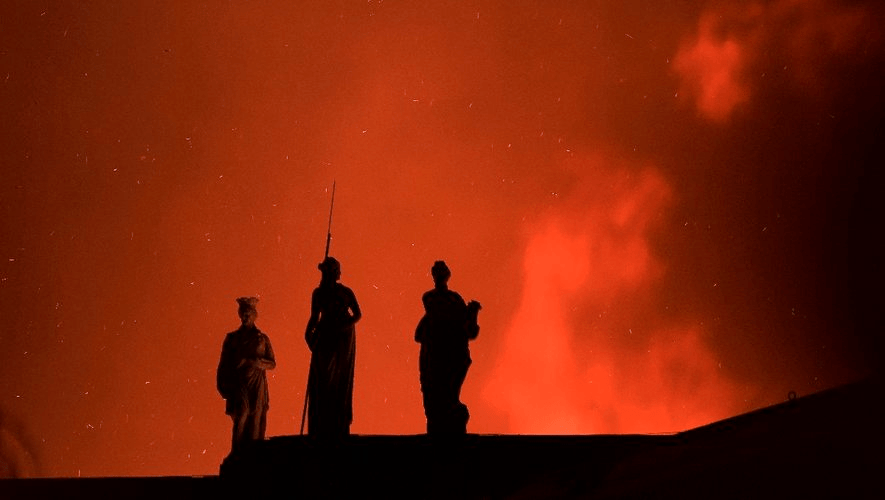
There is a fascinating example of this in the revue RADDAR, issue number 4 (2022), titled "faux / fake". The authors explain that after the great fire at the National Museum of Brazil (2018), many pre-Columbian statues were destroyed and lost. Fortunately, months prior to the incident, a team had 3D scanned a large portion of these invaluable testaments of the past to create a digital catalog.
After the fire, these 3D scans helped create copies of the statues. However, because not all scans were of high quality and the specific techniques used to fabricate the original ceramics were unknown, the museum opened a challenge to an international audience of artists to recreate the lost artifacts. Some were made with a blend of modern techniques, such as 3D printing and CNC-machining, and traditional ceramics, aiming to reproduce the results of what are, to this date, lost arts.
So, the question is: what are these new statues in relation to the original ones? Which ones are truer?
The copies are not the originals. They are not even "copies" in the strict sense, but merely artistic interpretations. Yet, for all intents and purposes, these copies have become the new truth.

The hyper-production of semi-truths
Our human world has followed a very similar process.
My grandparents lived in a world where media was mainly printed, and TV was a novel gadget allowing radio to broadcast moving images. They lived in a world where knocking at the door was normal, as it was the only way to confirm availability. My kids live in a post-friction world, where movies, media, and content are made for reaction, not attention (and even less for reflection). They live in a world where knocking at the door is weird and raises suspicions. Friendship, romantic relationships, and hobbies have been digitized, platformized, and financialized.
Our designed world has produced new ways and new truths. But where design once crafted individual snowflakes, distinct and crystallized solutions, Generative AI is now automating this production outside of us. It is creating a blizzard of fuzzy semi-truths, where the unique shards are lost in the whiteout.
Thanks for reading!
Kevin from Design & Critical Thinking.


Discussion